Bloomberg’s latest data reveals Pakistan has achieved extraordinary progress in global EM rankings. The country now stands as the second most improved economy globally in reduction of sovereign default risk. This strengthening financial credibility marks a resounding shift for international investors tracking emerging market performance.
The South Asian nation’s CDS-implied default probability decreased by an exceptional 2,200 basis points between June 2024 and September 2025. Credit default swaps pricing now reflects consistent improvement across four quarters, a feat unmatched by any country in the EM sample. Pakistan’s trajectory could not match conventional recovery patterns, instead posting results that place it ahead of major economies.
Bloomberg’s Report on Pakistan’s Economic Performance
Bloomberg Intelligence ranks Pakistan as the second-best performer in EM Rankings for credit risk improvement. The publication notes CDS-implied probability dropped from 59 percent to 47 percent over past 12 months. This drop of 11 percentage points represents the biggest reduction among tracked emerging markets. Global investors now perceive lower chances of defaulting on debt, with the world’s sharpest decline past year. Bloomberg’s research arm confirms this data surpasses improvements in Argentina, Tunisia, Nigeria, Egypt, Gabon, and Turkiye. The likelihood of this country as a borrower failing to repay obligations has significantly decreased. Topping the list demonstrates how global financial landscape views sovereign default risk differently now.
The adviser to finance minister, Khurram Schehzad, on Sunday explained how CDS pricing works as financial insurance for investors to protect against risk of default. When the cost of a CDS drops, markets view the company or sovereign as less risky. Pakistan’s CDS-implied probability falls sharply, indicating international investors believe the second in the world ranking is justified. This sharpest drops in sovereign default risk occurred over four consecutive quarters — unprecedented in the nation’s history. The market price of protection instruments has derived lower premiums. NEW YORK-based analysts note Pakistan achieved second-best emerging economy status through reforms. The international publication tracked Global Emerging Market conditions. CDS-implied data from the International Monetary Fund confirms the second-best positioning globally.
Factors Behind the Economic Improvement
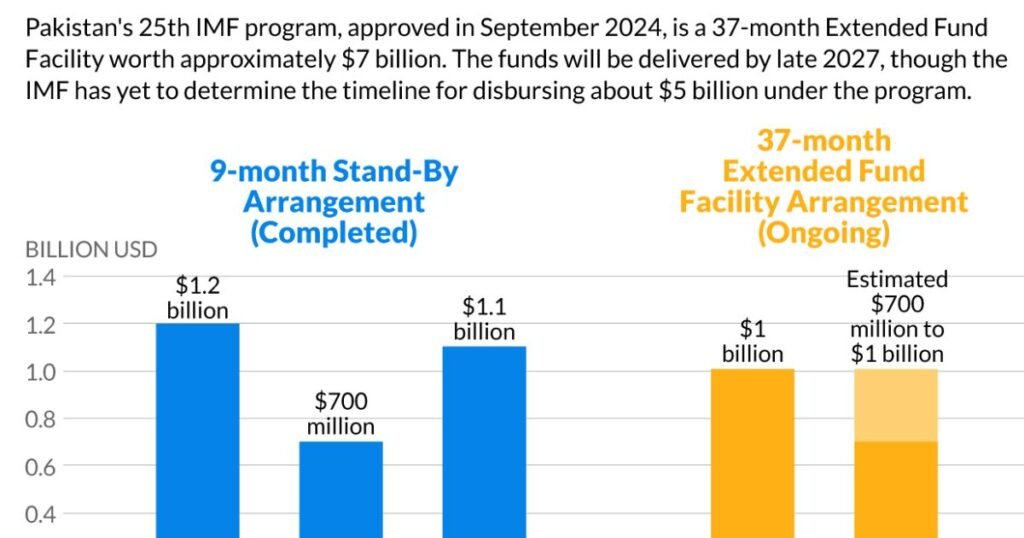
Pakistan has faced a prolonged economic crisis over the last few years, marked by critically low foreign exchange reserves. The acute balance-of-payment crisis created a looming risk of default in 2023 before intervention occurred. This crisis was averted when the IMF released a crucial loan tranche, providing essential support to stabilize finances. Friendly countries, including China, United Arab Emirates, and Saudi Arabia, played key role in preventing collapse. After averting default, the South Asian nation narrowly avoided sovereign default through dwindling reserves management and addressing mounting debt repayments.
Factors keypoints:
- IMF Financial Support
- Assistance from Friendly Countries
- Crisis Management
- Implementation of IMF-Prescribed Reforms
- Long-Term IMF Program
- Fiscal Adjustments
- Financial Transparency and Discipline
- Improved Credit Ratings
Islamabad secured a short-term bailout from the International Monetary Fund (IMF) with additional support from key allies like Saudi Arabia, United Arab Emirates, and China. Since then, Pakistan has undertaken tough IMF-prescribed reforms and a series of IMF-recommended structural reforms to stabilise the economy. Fiscal adjustments aimed at stabilizing the economy have helped bolster macroeconomic indicators significantly across multiple quarters. The improvement in Pakistan’s risk profile comes after implementing consistent policies focused on financial transparency and discipline. Credit rating agencies like Standard & Poor’s and Fitch have acknowledged this progress through improved outlooks for future performance.
Pakistan’s Economic Crisis and Recovery
Pakistan’s sovereign default probability witnessed the sharpest decline among major EMs over the last 15 months. Notably, Pakistan remains the only country demonstrating consistent quarterly improvement in default risk reduction. Measured through Credit default swaps (CDS), these insurance-like financial contracts help investors hedge risk against a government failing to repay debt. Issued and traded by large financial institutions, the contracts pay out in the event of default. A higher cost of CDS indicates greater perceived risk of sovereign default risk.
Pakistan’s Economic Crisis keypoints
- Rising external debt and a severe lack of foreign exchange.
- Rising Credit Default Swaps (CDS) indicate high default risk.
- Low investor confidence as a result of unstable finances.
Pakistan’s Economic Recovery keypoints
- Stability was restored through financial restraint and IMF-supported reforms.
- Steep drop in the likelihood of default over a 15-month period.
- Renewed investor confidence and a more optimistic global economic outlook.
Bloomberg Intelligence, a highly regarded financial data and media company widely used by global investors, analysts, and institutions, employs CDS pricing to assess each country’s sovereign risk through Global EM Rankings. Khurram Schehzad, adviser to finance minister, shared via social media post on Saturday that this represents a resounding signal to global investors that Pakistan is back on map and moving forward with stability, credibility, and reform at its core. The senior finance official stated that globally, the perception has strengthened that Pakistan is moving toward its economic goals through consistent policies and financial transparency. The country is now seen as a safe, attractive, and profitable destination for international investors—a clear message to investors that Pakistan is steadily rebuilding its market credibility while standing out as one of the most improved sovereign credit stories in the emerging market universe.
More Reads
- Petrol Price: Fuel hits Rs. 264.61/L, reflecting rising economic strain.
- Asia Cup Snub: India–Pakistan handshake sparks fresh controversy.
- Cricket Clash: Pakistan vs Oman delivers an Asia Cup thriller.
FAQ
1. Is Pakistan an emerging economy?
Yes, Pakistan is considered an emerging economy with growing potential in technology, energy, and manufacturing sectors.
2. What are the chances of Pakistan defaulting?
Currently, Pakistan faces economic challenges but continues to avoid default through reforms and international support.
3. What happens if Pakistan defaults on debt?
A default could weaken the currency, increase inflation, and limit access to global financial markets.
4. What is the future of Pakistan in 2025?
By 2025, Pakistan aims to stabilize its economy through digital transformation and sustainable development.
5. What will be Pakistan’s economy in 2050?
By 2050, Pakistan is projected to become one of the world’s top 20 economies with strong industrial and tech growth.

Zainab Farooq is a dedicated reporter and celebrity wealth analyst with Pakistan Coverage, committed to bringing readers timely and accurate information across diverse topics. With a passion for storytelling and fact-based reporting, she covers everything from celebrity net worth insights and entertainment industry analysis to local Pakistani developments and global trends, ensuring readers stay informed about the stories that shape our world.