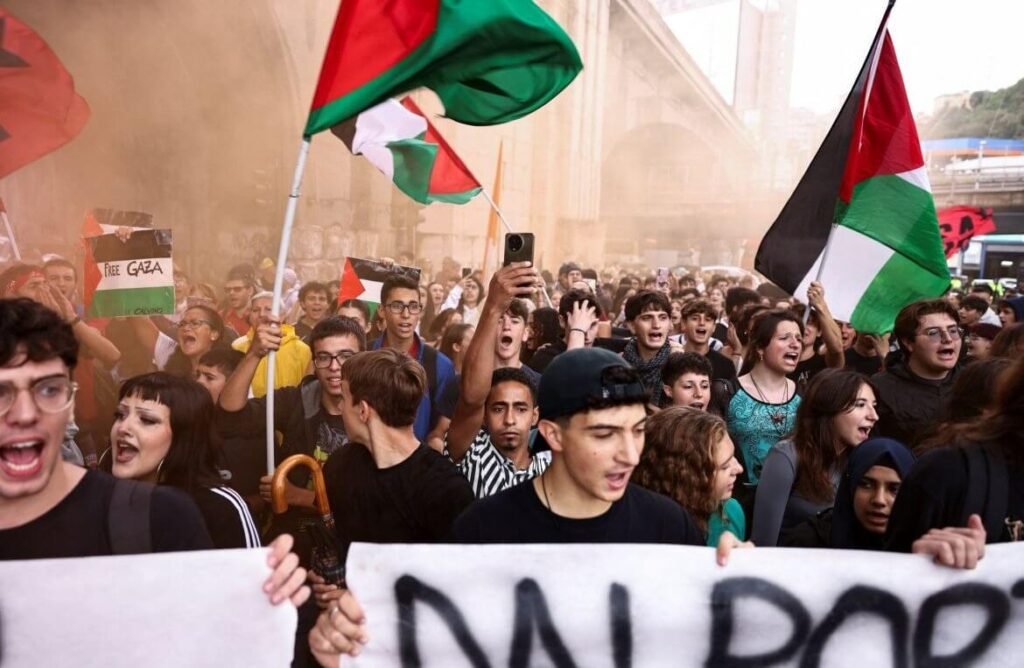
Italy’s ports witnessed unprecedented disruptions as dockworkers initiated coordinated strikes across nationwide facilities. Palestinian solidarity movements gained momentum when unions blocked critical transport infrastructure in Genoa and Livorno. Protestors gathered at major terminals demanding Italy’s government recognise Palestine amid escalating Gaza tensions.
Demonstrations erupted simultaneously as thousands of workers participated in 24-hour strikes affecting railways and schools. Northern cities like Milan experienced severe transit delays while southern regions faced cancelled services. Police deployed water cannon against demonstrators who threw bottles and flares during confrontations.
Port Blockades and Strikes
Port operations across Italy faced unprecedented disruptions as unions staged solidarity strikes demanding immediate break-off relations with Israel. Workers shut down public transit and ports, throwing stones while waving Palestinian flags. The USB union called for concrete way to react against what they termed genocide taking place in Gaza.
Italian defence giant Leonardo facilities near Florence witnessed protesters blocking entry points, responding with fire hydrants as officers deployed baton charges. Dozens were arrested in connection with riots during pro-Gaza demonstrations that swept through 75 cities. Heavy rain couldn’t deter mass participation as tens of thousands rallied Monday, September 22 in solidarity with the Palestinian people.
Mass demonstrations broke out nationwide in Italy in support of Gaza:
- Ports and transportation disrupted as unions organized strikes.
- Employees closed down operations, threw stones, and waived Palestinian flags.
- USB union called for severing relations with Israel, condemning genocide.
- Demonstrations reached Leonardo defence installations outside Florence; violence erupted.
- Police employed baton charges and protesters employed fire hydrants.
- Dozens detained during riots in 75 cities.
- Tens of thousands took to the streets on September 22 amidst heavy rain.
Nationwide Protests and Demonstrations
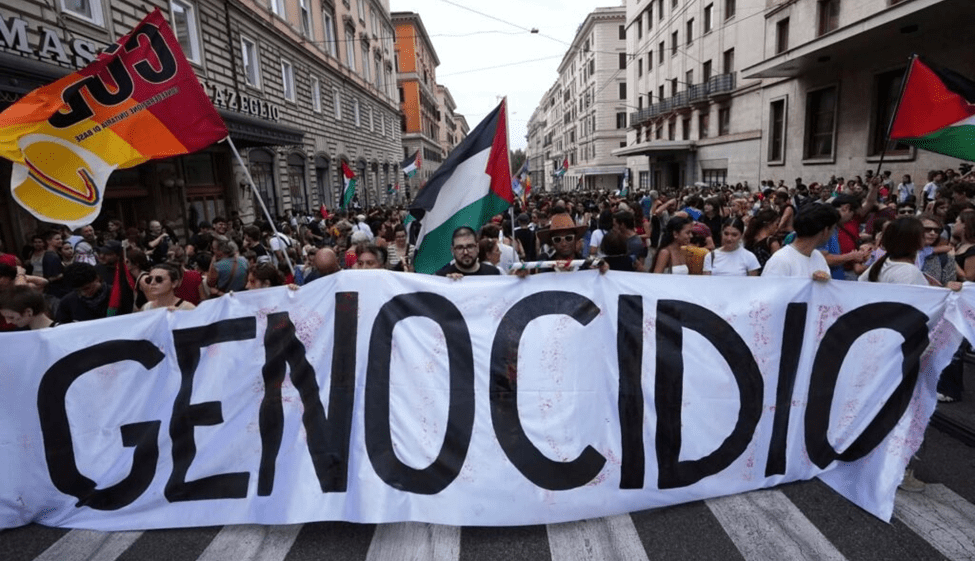
Unions staged nationwide solidarity strikes across 75 cities, with tens of thousands who rallied during heavy rain on Monday. Mass participation swept through demonstrations as workers demanding immediate break-off of relations with Israel responded to calls for concrete action.
Protesters blocking major infrastructure faced officers using baton charges and fire hydrants against crowds waving Palestinian flags. Dozens were arrested in connection with riots during pro-Gaza demonstrations, while USB union called this a concrete way to react to genocide taking place in Gaza.
Transport Disruptions and Strike Impact
Workers orchestrated sit-ins across Italy’s main transportation hubs, effectively slowing goods movement through strategic port blockades. Access to Livorno and Marghera became restricted as striking personnel disrupted services with coordinated rallies.
Roads leading to Venice faced queues while dock operations in centre-north regions experienced pressure from organized demonstrations. The partially affected infrastructure highlighted how targeted protests can impact Italy’s economic arteries without complete system shutdown.
Italian transport disruptions led to significant slowdowns at major hubs:
- Sit-ins arranged at principal transport hubs.
- Strategic port blockades curbed goods flow.
- Livorno and Marghera access disrupted.
- Venice roads experienced lengthy queues.
- Central-north dock operations strained.
- Protests demonstrated economic exposure short of complete shutdown.
Violence and Clashes
Tensions escalated dramatically when hundreds of demonstrators confronted authorities near Rome’s central Termini railway station, with rocks hurling through the air as protesters demanded immediate ceasefire measures from Giorgia Meloni’s government. The clash intensified when secondary school pupils joined the demonstrations, their chanting echoing Free Palestine slogans while traffic came to a complete stop along major highways.
Violence erupted simultaneously across multiple cities including Turin, Naples, and Bari as organizers struggled to maintain control over the estimated 20000 participants who had gathered for the march. Authority figures faced direct confrontation when students from Bologna’s university halted lessons and occupied lecture halls, while plant workers in Campi Bisenzio blocked the A14 trans-Apennine route, forcing trains to experience delayed schedules of up to 80 minutes.
Clashes and violence broke out throughout Italy amid protests:
- Hundreds clashed with authorities along Rome’s Termini station, thrown rocks.
- Protesters called for ceasefire by government of Giorgia Meloni.
- Students joined in, chanting Free Palestine chants.
- Traffic blocked on main highways.
- Violence escalated to Turin, Naples, and Bari with 20,000 attendees.
- Bologna students occupied lecture theaters, suspending lessons.
- Plant workers in Campi Bisenzio blocked A14 highway.
- Train timetables disrupted by up to 80 minutes.
Educational and Service Disruptions
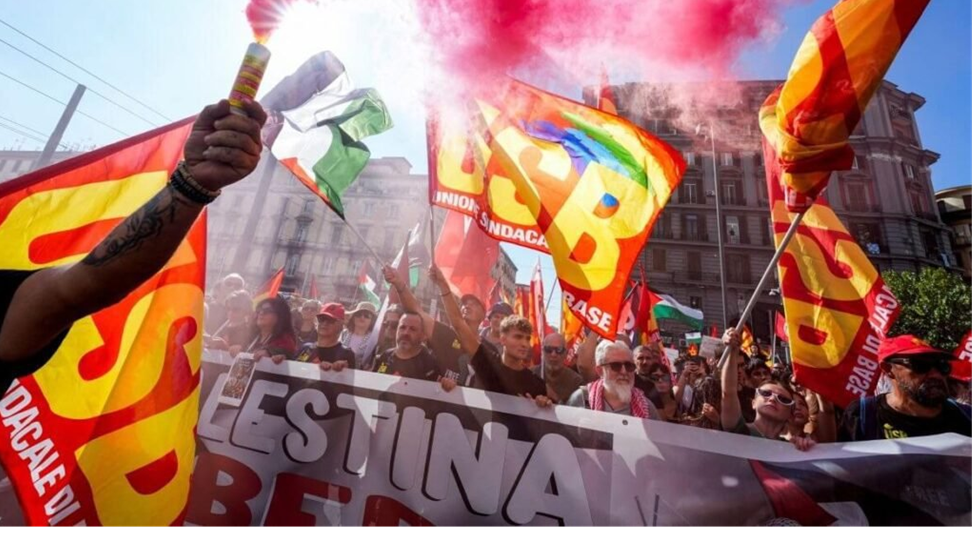
The general midnight strikes created widespread chaos across Italy’s educational infrastructure. Major universities in Palermo faced unexpected cancellations as railway workers joined the protests. Local services remained limited while regional train announcements echoed through empty stations. Students found themselves stranded when the M4 metro line closed for two hours.
Affecting multiple sectors, the educational system witnessed unprecedented disruption as 100000 people participated nationwide. Schools across the country struggled with transportation issues while the Florence-Pisa-Tens highway experienced significant delays. The blockade event forced institutions to implement emergency protocols, with many carrying placards demanding solidarity with Gaza victims.
Government Position and International Context
Italy has adopted a cautious approach while remaining ideologically close to the United States under President Donald Trump. The state has repeatedly expressed concern over the offensive yet shown reluctance in implementing European Union’s proposed trade sanctions. This ultra-conservative stance reflects the complex diplomatic balancing act.
Political analysts note the government’s moment of hesitation to fully recognize certain actions as terrorism. The end result positions Italy uniquely within European responses to Middle Eastern conflicts.
Union Demands and Messaging
Workers outside Pisa have mobilized along the SGC demanding accountability from those they’ve accused of supporting the conflict. Union leadership emphasizes that current policies effectively enable what they consider systematic oppression. Labor organizations argue that remaining silent equals complicity in ongoing violence.
The messaging centers on economic pressure as the most effective tool for change. Unions stress that coordinated action can influence international diplomatic decisions more than traditional political channels.
Highway and Infrastructure Blockades
Transportation networks experienced significant disruptions as demonstrators targeted key arterial routes. The strategic blocking of major highways aimed to amplify the economic impact of the protest movement. Infrastructure became the symbolic battleground for expressing dissent against foreign policy positions.
Coordinated efforts focused on maximizing visibility while minimizing harm to essential services. Protesters carefully selected locations that would generate media attention without compromising emergency response capabilities or public safety.
Scale of Participation
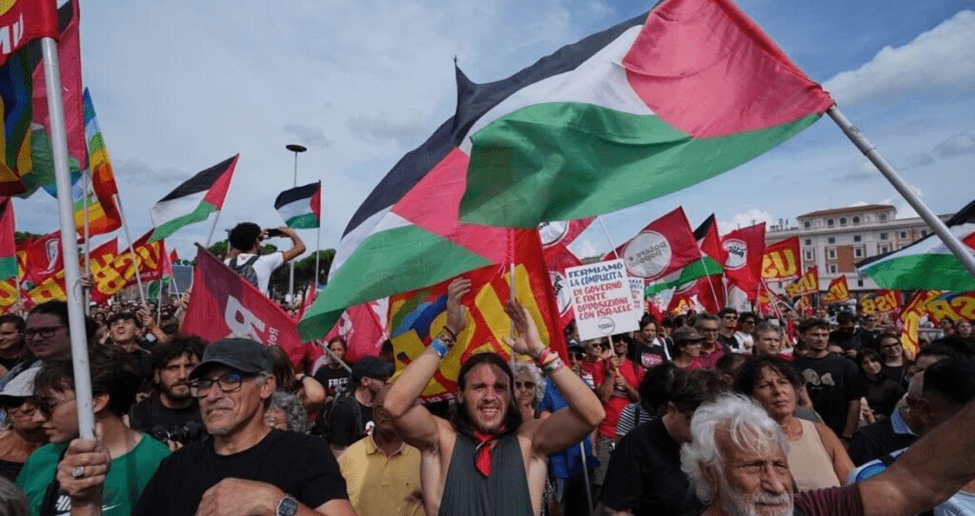
Mass mobilization exceeded initial estimate figures as Global Sumud Flotilla supporters joined local activists in widespread demonstrations. Large numbers participated in synchronized actions across multiple universities and government offices throughout major cities. The Cambiare Rotta (Change Course) group coordinated with Italy’s educational institutions where many facilities remained closed.
Participation levels reflected deep public engagement with international justice issues. The demonstrations drew diverse constituencies including students, workers, and civil society organizations, creating unprecedented unity around foreign policy criticism.
Frequently Asked Questions (FAQs)
What protests are happening in Italy today 2025?
Various Italian cities saw massive protests today based on solidarity with Palestine and against Israel’s military aggression.
Was there a protest in Rome today 2025?
Thousands of protesters took to the streets in central Rome today carrying Palestinian flags, chanting slogans, and calling for action from the government.
Is there a Palestine protest in Rome today?
Yes, The Palestine protest in Rome today involved student organizations, trade unions, and activists demanding an end to arms trade and increased diplomatic pressure.
Does Italy favor Palestine or Israel?
Italy has diplomatic relations with Israel but has revealed mixed public sentiment, with large-scale protests openly showing great sympathy for Palestine.
Read More Blogs Here:
Saudi Arabia and Pakistan Sign Historic Defence Pact
Transforming Punjab: CM Punjab’s E-Taxi Scheme 2025
Conclusion
The widespread Italian mobilization represents a pivotal moment where civil society directly challenged government foreign policy through coordinated economic pressure. Agencies monitoring the situation noted how support for Palestinian causes transcended traditional political boundaries, creating long-lasting impacts on public discourse. The war in Gaza catalyzed unprecedented domestic activism, with cheers echoing through demo sites nationwide.
This sea of protest activity demonstrates how international conflicts increasingly shape domestic political landscapes. The movement’s aid to Palestinian solidarity efforts may influence future Italian diplomatic positions and UN voting patterns. News coverage highlighted the effectiveness of combining traditional demonstrations with strategic economic disruption, potentially serving as a model for future activism.

Zainab Farooq is a dedicated reporter and celebrity wealth analyst with Pakistan Coverage, committed to bringing readers timely and accurate information across diverse topics. With a passion for storytelling and fact-based reporting, she covers everything from celebrity net worth insights and entertainment industry analysis to local Pakistani developments and global trends, ensuring readers stay informed about the stories that shape our world.