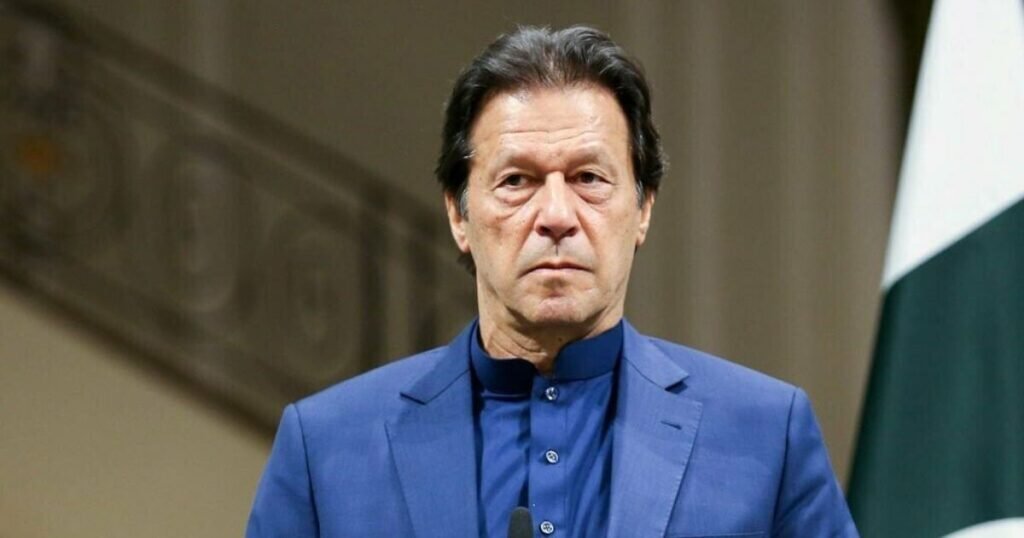
Imran Khan financial trajectory mirrors his extraordinary life transitions. Born into a wealthy Pashtun family on October 5, 1952, in Lahore, Pakistan, his privileged environment shaped early opportunities. His ancestors included Haibat Khan Niazi, a leading general under Sher Shah Suri in the 16th century. The Niazi group heritage and Burki community connections through his maternal family established deep roots. His paternal family included Ikramullah Khan Niazi, a civil engineer, and wife Shaukat Khanum.
His cricketing career from 1971 to 1992 generated substantial income through Test cricket and ODI performances. Playing for Worcestershire, Sussex, and Pakistan International Airlines alongside Dawood Industries contracts built wealth. Captain roles, Player of the Series awards, and achieving the all-rounder’s triple with 3,000 runs and 300 wickets enhanced market value. Post-retirement, philanthropy through Pakistan Tehreek-e-Insaf (PTI) founded in 1996 shifted focus. His tenure as 22nd Prime Minister of Pakistan following the 2018 general election brought scrutiny to assets despite economic challenges and IMF bailouts.
Imran Khan Biography
| Attribute | Details |
| Full Name | Imran Ahmed Khan Niazi |
| Date of Birth | October 5, 1952 |
| Age (as of 2025) | 73 Years |
| Birthplace | Lahore, Punjab, Pakistan |
| Nationality | Pakistani |
| Profession | Politician, Former Cricketer, Philanthropist |
| Political Party | Pakistan Tehreek-e-Insaf (PTI) |
| Education | Oxford University (Philosophy, Politics, and Economics) |
| Cricket Career | Captain of Pakistan Cricket Team; led Pakistan to 1992 World Cup victory |
| Prime Minister Tenure | August 18, 2018 – April 10, 2022 |
| Famous For | Winning 1992 Cricket World Cup, Founding PTI, Leading Reforms in Pakistan |
| Net Worth (2025) | Rs 14.07 billion |
| Sources of Income | Politics, Cricket Career, Real Estate, Investments, Business Ventures |
| Charity Work | Founder of Shaukat Khanum Cancer Hospital and Namal University |
| Marital Status | Married to Bushra Bibi |
| Residence | Bani Gala, Islamabad, Pakistan |
Imran Khan Early Life and Family
Early Life
- Born October 5, 1952, in Lahore, Pakistan.
- From a well-off Pashtun family.
- Studied at Aitchison College, Royal Grammar School, and Oxford University.
- Excelled in cricket, later joining the Pakistan national team.
Family
- Father: Ikramullah Khan Niazi (engineer)
- Mother: Shaukat Khanum (hospital named after her)
- Four sisters.
Imran Ahmed Khan Niazi was born on 5 October 1952, establishing roots in a Lahore family environment. His hometown shaped early perspectives before England beckoned for education. The future philanthropist and cricketer attended Keble College, Oxford, where intellectual pursuits merged with athletic ambitions. University of Oxford years proved transformative, exposing him to diverse thought systems. His age 16 marked a pivotal juncture when competitive sports entered his consciousness seriously. Family connections provided a 75-acre property later, demonstrating generational wealth transfer patterns. Inherited assets and gifted holdings became foundational elements of his eventual real estate properties portfolio.
Islamabad residences valued at $2.6 million in 2017 reflected accumulated family assets through decades. Financial disclosures to the Election Commission of Pakistan in mid-2024 revealed Rs315.95 million total worth. Converting USD figures, his net worth approximated $4 million officially. The Pakistani politician maintained transparency about wealth sources despite scrutiny. His trajectory from student athlete to 19th prime minister of Pakistan spanned complex financial evolutions. These properties represented both legacy preservation and strategic asset management across generations.
Imran Khan Net Worth
| Year | Net Worth | Major Source of Income / Events |
| 1992 | Rs 562.8 million | Cricket career earnings, endorsements after World Cup win |
| 2000 | Rs 1.41 billion | Book royalties, early political ventures, property investments |
| 2010 | Rs 4.22 billion | Growth from investments, increased political influence |
| 2015 | Rs 7.04 billion | Political prominence, asset appreciation, book sales |
| 2018 | Rs 9.85 billion | Became Prime Minister, declared assets and properties |
| 2022 | Rs 12.66 billion | Continued investments, property value growth |
| 2025 | Rs 14.07 billion | Ongoing income from assets, donations to foundations |
Imran Khan’s financial standing has sparked curiosity, with estimates representing diverse perspectives on his accumulated wealth. His journey from one of the greatest cricketers to holding various political positions shaped his economic trajectory significantly. The portfolio he built through decades includes assets from his cricket days and subsequent ventures. His role as ambassador for tourism during the caretaker government under Moeenuddin Ahmad Qureshi added professional dimensions. Contested financial disclosures became contentious after he won leadership of Pakistan.
His office tenure saw scrutiny over the Toshakhana case involving state gifts and their acquisition. The Al-Qadir Trust case brought corruption charges examining property transactions and funding sources through his trust. Supporters argue these legal challenges were politically motivated, while critics question transparency in wealth accumulation. His term as Prime Minister from 2018 until being ousted via no-confidence vote exposed financial dealings to public examination. The conviction and subsequent disqualification from holding public office intensified debates about his actual net worth and asset legitimacy.
Imran Khan Personal Life
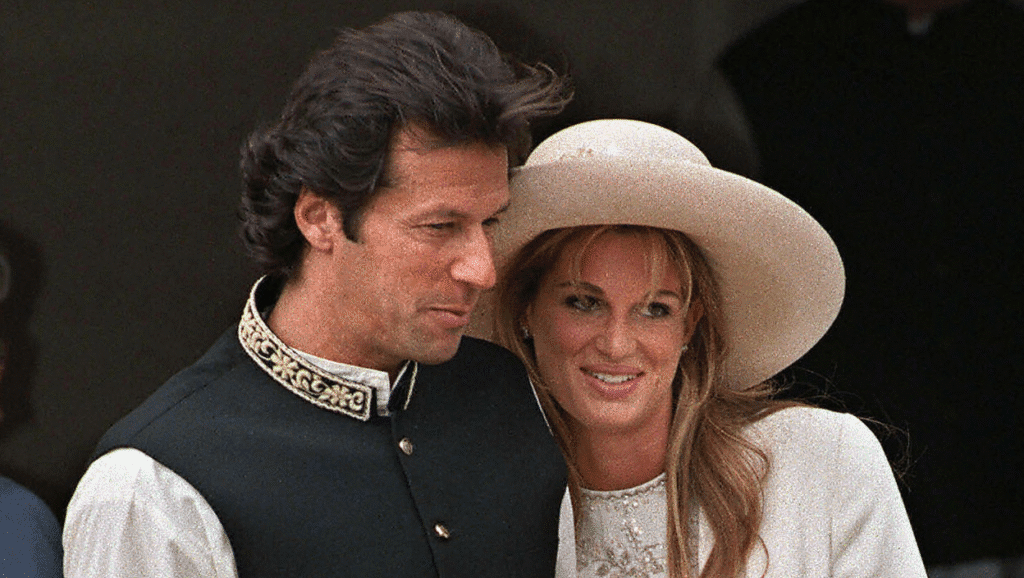
- Married Jemima Goldsmith (16 May 1995)
- 2nd wife Reham Khan (6 January 2015)
- 3rd wife Bushra Bibi (1 January 2018)
- Two sons with Jemima — Sulaiman and Qasim.
Imran Khan’s personal journey intertwined family roots with his Pathan origin, where cousins like Javed Burki and Majid Khan shared his cricketing legacy. His lineage traced back to Sufi mystic Pir Roshan from the Roshaniya Movement in Kaniguram, South Waziristan, Khyber Pakhtunkhwa. The family lived in Jalandhar for centuries before migrating during Independence in 1947, eventually settling in Lahore.
Imran’s father Ikramullah Khan Niazi was a civil engineer, while his mother Shaukat Khanum was a housewife and daughter of a prominent civil servant. Imran has two children from his first wife, Jemima Goldsmith. Khan with his uncle Javed Zaman, who would later become his cricket mentor, c. 1957. His popularity extended beyond cricket into politics, where he represented Mianwali and championed social justice. Nawaz Sharif once offered him second-in-command in Pakistan Muslim League (PML), but he declined. His vision for Naya Pakistan (New Pakistan) reflected principles from the Islamic welfare state of Medina, emphasizing governance and anti-corruption measures. He maintained close ties with hometown teams while building diplomatic relationships across Pakistan.
Imran Khan Cricket Career
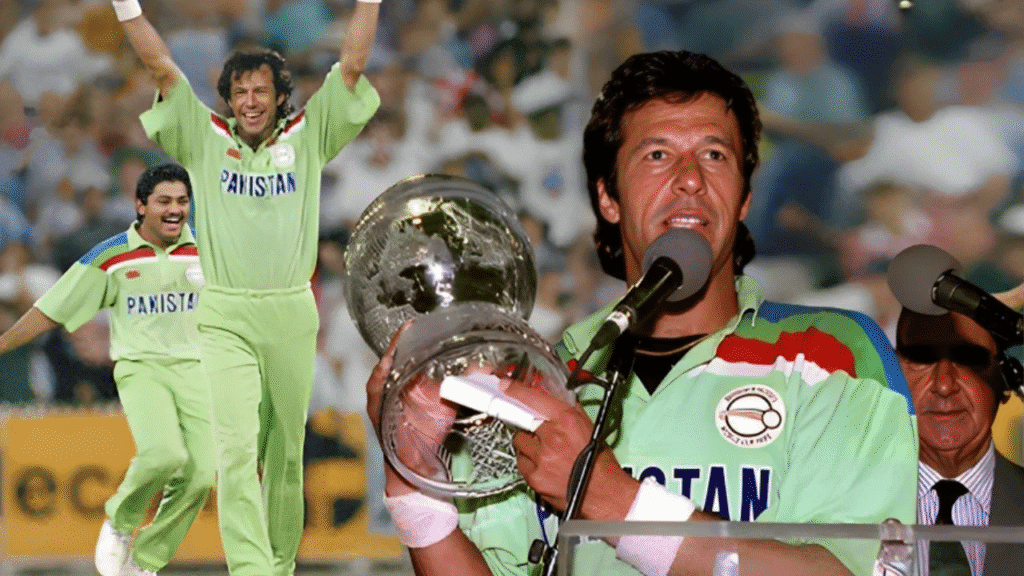
- Began international cricket career in 1971 against England.
- Played for Pakistan’s national team (1971–1992) as an all-rounder and captain.
- First-ever World Cup victory in 1992.
- Played for Sussex and Worcestershire in English county cricket.
Imran Khan transformed from a promising bowler into one of cricket’s most complete performers. His 362 wickets across formats positioned him fourth overall in ODIs, while maintaining an exceptional second-highest all-time batting average of 61.86 as a Test batsman at number six in the batting order. He scored 3,807 runs in 88 Test matches spanning 126 innings, with an average of 37.69 that included six centuries and 18 fifties. His highest score of 136 demonstrated remarkable consistency.
Across 175 matches in limited-overs cricket, he accumulated 3,709 runs at 33.41, reaching 102 not out as his peak. His best ODI bowling performance of 6 for 14 remains a record for bowling figures by any bowler in an ODI innings, though it came in a losing cause. Among the eleven players who’ve achieved this rare feat, his 75-Test achievement came third-fastest in history, securing him among the first four players to reach this milestone by 2025.
Imran Khan Political Career
- Founded PTI (1996)
- Became Prime Minister (2018–2022)
- Declared assets include Bani Gala residence, lands, and investments.
The founder of Pakistan Tehreek-e-Insaf entered politics in 1996, transforming from a national hero into a political party leader. His chairman role continued until 2023, when the Election Commission of Pakistan intervened. The PTI represented his vision for governance, drawing from principles he observed during his travels. His playboy lifestyle from cricketing days contrasted sharply with his later association with Bushra Bibi, his spiritual guide who influenced his rise to political power.
He contested the 2018 Pakistani general election across five constituencies: NA-35, Bannu, NA-53, Islamabad-II, NA-95, Mianwali-I, NA-131, Lahore-IX, and NA-243, Karachi East-II. Early official results showed his party led the poll, defeating the opposition PML (N) despite alleged large-scale vote rigging. On 28 July, election officials declared 116 of 270 seats won, making him the first person in Pakistan elections history to contest and win five constituencies. His 100-day agenda included creation of a new province in Southern Punjab and fast-tracking the merger of Federally Administered Tribal Areas.
Career Stats
| Category | Tests | ODIs |
| Matches Played | 88 | 175 |
| Runs Scored | 3,807 | 3,709 |
| Wickets Taken | 362 | 182 |
| Batting Average | 37 | 33 |
| Bowling Average | 22 | 26 |
| Captaincy Record | 48 Matches | 139 Matches |
| International Career Span | 1971 – 1992 | 1971 – 1992 |
| Major Achievement | Won 1992 Cricket World Cup (as Captain) | — |
| Awards & Honors | Wisden Cricketer of the Year (1983), ICC Hall of Fame (2010) | — |
Imran’s journey as one of cricket history’s greatest all-rounders began with a first-class debut for Lahore A against Lahore B. His aggressive batting style complemented exceptional fast bowling, earning him recognition through the Wisden Cricketers of the Year honor in 1983. The Pakistani national team witnessed his transformation from promising debut player to International Cricketer of the Year in 1989.
His captaincy revolutionized international cricket through advocacy for neutral umpiring and mastering reverse swing bowling technique learned from Sarfraz Nawaz. Captained Pakistan to victory in the Cricket World Cup, achieving the pinnacle of his successful period. Playing for Lahore Greens and Blues Cricket team during 1973–1975, he later joined English county cricket in 1976 at Edgbaston. His One Day International at Trent Bridge during the Prudential Trophy in 1980 showcased emerging dominance. Wasim Akram and Waqar Younis developed and popularised techniques he pioneered. Inducted into the ICC Cricket Hall of Fame in 2010, his influence mirrored Franz Beckenbauer in 2009.
Imran Khan 2018 Elections Campaign
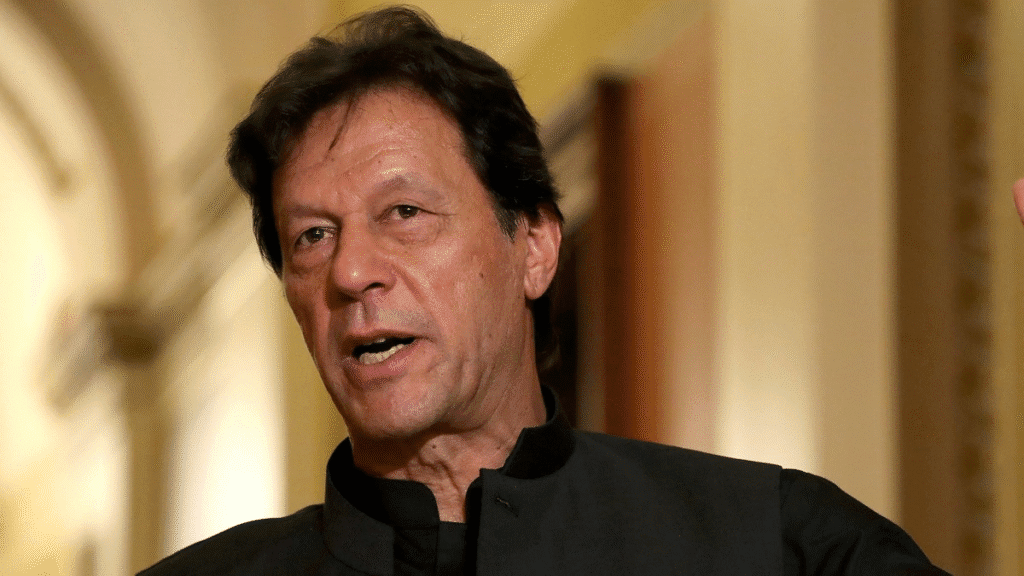
The party emerged as a formidable force, capitalizing on young, urban Pakistanis who felt disenchanted with established political parties. Turning point arrived when the party won most seats in the National Assembly, transforming Khan from a marginal figure in Pakistani politics into a legitimate contender. His campaign emphasised creating an Islamic welfare state based on principles of justice and transparency. The movement gained traction across the political landscape, promising to end economic mismanagement and media censorship.
Efforts focused on mobilizing citizens tired of alleged political victimization of opponents by previous regimes. The coalition government framework with independents became crucial for securing power after the 2013 near-miss, where they achieved second-largest status by popular vote. His political ideology resonated deeply, addressing balance of payments crisis concerns and promising GDP growth through austerity policies and increased tax collection. This won him the seat needed for his eventual inauguration speech as Prime Minister.
Prime Minister (2018–2022)
- Served as 22nd Prime Minister of Pakistan from 2018 to 2022.
- Focused on anti-corruption, welfare, and economic reforms.
- Launched the Ehsaas Program and Naya Pakistan Housing Scheme.
- Sehat Sahulat Program for free healthcare.
Retiring from cricket, Khan struggled initially but later built a strong presence through his political party. His government navigated diplomatic tensions with India while facing criticism from opponents post-2002 general election. The Ehsaas Programme and Plant for Pakistan initiative expanded social welfare alongside climate reforms. Actions led to Pakistan’s removal from the FATF greylist, marking an official exit from international scrutiny. Protected areas grew under conservation policies.
The COVID-19 pandemic triggered economic turmoil with rising inflation destabilizing governance. Sehat Sahulat Program reforms aimed at healthcare access despite fiscal contraction. Renewable energy transition policies promoted sustainability, yet April 2022 marked turbulence. Khan became the first Pakistani prime minister removed via no-confidence motion, ending his term abruptly. His tenure balanced provincial government coordination with federal priorities, leaving mixed economic and social legacies amid political upheaval.
Arrest and Legal Troubles
Arrest proceedings intensified after his political downfall in 2022. The former prime minister faced multiple charges across various national institutions. His detention sparked massive protests nationwide. Pakistan witnessed unprecedented political turmoil. Legal battles consumed his energy entirely. Court appearances became routine for the embattled leader.
Charges ranged from corruption allegations to national security breaches. ISI documents surfaced during investigations. His supporters claimed pressure tactics were employed systematically. The government pursued cases aggressively through prosecution channels. International observers questioned the judicial process. His departure from power triggered these cascading legal complications continuously.On 9 May 2023, former Prime Minister and politician Imran Khan was arrested from inside the Islamabad High Court in Islamabad by the National Accountability Bureau (NAB) on the charges of corruption in connection with the Al-Qadir Trust, which he owns alongside his wife, Bushra Bibi.
Frequently Asked Questions (FAQs)
Imran Khan World Record in Cricket?
He is the only Pakistani captain to win the 1992 ICC Cricket World Cup, and one of the few all-rounders in history to achieve the Test double of 3,000+ runs and 300+ wickets.
Imran Khan Record as Captain?
As captain, he led Pakistan in 48 Tests and 139 ODIs, securing 14 Test wins and 77 ODI victories, including the nation’s historic 1992 World Cup triumph.
Who is the richest person in Pakistan with net worth?
The richest person of Pakistani origin is Shahid Khan, with an estimated net worth of $11–14 billion.
What is the net worth of Babar Azam in 2025?
Babar Azam’s estimated net worth in 2025 is around $5 million, earned from cricket, endorsements, and sponsorships.
How much is Imran Khan worth from SNAP?
At the time of Snap’s IPO, Imran Khan reportedly held about $145 million worth of Snap shares.
What is the salary of Imran Khan?
As Prime Minister, Imran Khan earned around PKR 196,979 per month after deductions.
Who is the no. 1 richest actor in the world?
The world’s richest actor is often listed as Dwayne “The Rock” Johnson, due to his films, brand deals, and business ventures.
Conclusion
Imran Khan’s journey intertwines cricket excellence with political ambition, leaving an indelible mark on Pakistan. His net worth, accumulated through sports, business ventures, and political career, reflects decades of public service and personal achievement. Arrest controversies and legal troubles haven’t diminished his influence or popularity among supporters nationwide.
From bachelor life in London’s high society circles to becoming Prime Minister, his trajectory demonstrates remarkable transformation. Personal life scrutinized by British tabloids, relationships with socialites, and marriages to Jemima Goldsmith and Reham Khan shaped public perception significantly. His legacy encompasses cricket triumphs, charitable initiatives, and political reforms despite ongoing confrontations with state institutions.
Read More Blogs Here:
Nick Hillary Net Worth $1 Million: A Powerful Story of Resilience
Brandon Steven Net Worth $30M: A Powerful Success Story
Italy’s Ports Blocked as Gaza Protests Sweep Nation

Khansa Farooq is a celebrity wealth analyst and entertainment finance journalist specializing in comprehensive net worth investigations for Pakistan Coverage. With expertise in financial research, asset evaluation, and entertainment industry economics, she delivers accurate and detailed celebrity wealth profiles. Her meticulous research approach and commitment to verified financial data ensures readers receive reliable insights into the fortunes of Pakistan’s biggest stars and international celebrities.