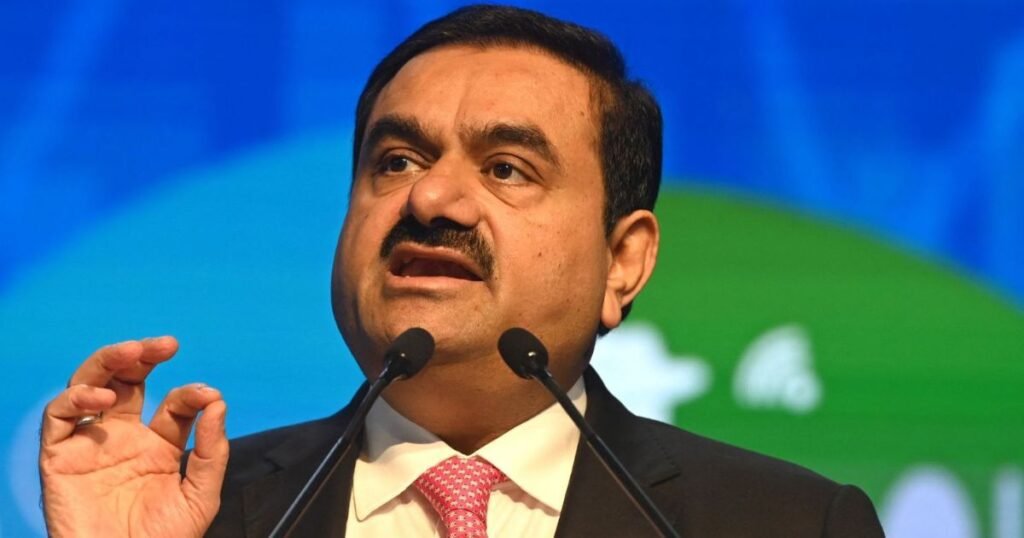
Gautam Adani, born on 24 June 1962 into a Gujarati Jain family, represents a remarkable business career trajectory. His father, Shantilal, worked as a small textile merchant in Tharad, northern part of Gujarat. The seventh among eight children, young Adani dropped out of Sheth Chimanlal Nagindas Vidyalaya school at 16. His keen interest in business led him to Mumbai in 1978 as a teenager. Educated minimally, he began work as a diamond sorter for Mahendra Brothers.
His career gained momentum when his elder brother, Mahasukhbhai Adani, bought a plastics unit in Ahmedabad in 1981. Invited to manage operations, this venture became his gateway to global trading. By 1985, he started importing primary polymers including polyvinyl chloride (PVC) for small-scale industries. The 1988 establishment of Adani Exports, now known as Adani Enterprises, marked his holding company foundation. Originally dealt in agricultural and power commodities, the Adani Group expanded dramatically after 1991 economic liberalisation policies proved favourable.
Profile Summary
| Category | Details |
|---|---|
| Full Name | Gautam Shantilal Adani (wikipedia) |
| Date of Birth | June 24, 1962 |
| Place of Birth | Ahmedabad, Gujarat, India |
| Family Background | Gujarati Jain family; father was a small textile merchant; 7th of 8 children |
| Education | Dropped out of Sheth Chimanlal Nagindas Vidyalaya at age 16 |
| Early Career | Diamond sorter at Mahendra Brothers (Mumbai, 1978); managed elder brother’s plastic unit (1981) |
| Founded | Adani Exports (now Adani Enterprises) in 1988 |
| Business Interests | Ports, airports, power, renewable energy, infrastructure, media, cement, agribusiness, data tech |
| Net Worth (2025) | ~$68.7 billion (28th globally, 2nd in India) |
| Peak Net Worth | ~$125 billion (Feb–Aug 2022, Asia’s richest) |
| Family | Wife: Priti Vora; Sons: Karan Adani (CEO of Adani Airports & Digital Labs) and Jeet Adani (senior position) |
| Philanthropy | Adani Foundation (Chair: Priti Adani) |
| Controversies | Hindenburg Research report (2023), U.S. bribery charges (2024), offshore holdings investigation (OCCRP) |
| Political Associations | Alleged close ties with Prime Minister Narendra Modi and BJP-led government |
| Notable Recognition | Forbes & Bloomberg billionaire rankings; Time 100 Most Influential People (2022) |
Early Life and Education
Gautam Shantilal Adani emerged from a modest mercantile family background. The Gujarati youth’s teenager years marked a pivotal shift when he moved to Mumbai in 1978. His rags-to-riches biography began unconventionally as he started work as a diamond sorter at Mahendra Brothers. This early exposure shaped his commercial instincts fundamentally.
Education to career Journey Keypoints
- Studied at Sheth C.N. Vidyalaya school in Ahmedabad
- Enrolled in commerce degree at Gujarat University
- Dropped out of college at age sixteen in 1978
- Moved to Mumbai in 1978 to start work
- He has publicly expressed regret about not finishing education
- Mahendra Brothers – diamond sorter, Mumbai (1978)
- Learned about PVC imports and oversaw brother’s plastic unit (1981)
By 1981, he managed his elder brother‘s plastic unit, which became his gateway into global trading. The experience with polyvinyl chloride (PVC) imports proved instrumental for his entrepreneurial foundation.
Net Worth
Gautam Adani’s financial standing reached $68.7 million, positioning him among India’s most affluent businessmen. The billionaire’s wealth trajectory demonstrates remarkable volatility, having briefly claimed Asia’s richest person status in February 2022 before surpassing Mukesh Ambani. His fortune experienced dramatic fluctuations, losing tens of billions of dollars months later following accusations from activist short-selling firm Hindenburg Research in January 2023. Despite market turbulence, October 2023 valuations estimated his holdings at $54.2 billion, securing 23rd position on Forbes Real Time Billionaires list.
The Adani family’s combined net worth of $116 billion reflects decades of strategic business expansion across multinational conglomerate operations. August 2022 marked his peak when Fortune named him 3rd richest person globally, though subsequent controversies triggered $45 billion losses within days. Market recovery in 2024 restored confidence despite ongoing investigations by SEBI and criminal proceedings initiated by U.S. Attorney’s Office, Brooklyn, New York. His September 2025 ranking as second richest person in India and 29th world demonstrates resilience amid persistent allegations of stock manipulation, fraud, and bribery charges involving $250 million payments to Indian government officials.
| Year | Net Worth (USD) | Global Rank | India Rank |
| February 2022 | ~$125 billion | 3rd | 1st |
| August 2022 | ~$125 billion | 3rd | 1st |
| January 2023 | ~$54.2 billion | 23rd | 1st |
| October 2023 | ~$54.2 billion | 23rd | 1st |
| September 2025 | ~$64 billion | 29th | 2nd |
| Current (Oct 2025) | ~$68.7 billion | 28th | 2nd |
Family and Personal Life
Married to Priti Vora, a dentist, in 1986, they have two sons: Karan and Jeet. His wife serves as chairperson of the Adani Group’s philanthropic arm, the Adani Foundation. Karan acts as CEO and leads Adani Airports business alongside Adani Digital Labs. Both sons serve in senior positions within the Adani Group conglomerate, continuing the family legacy. In January 1998, his associate Shantilal Patel was allegedly abducted and held hostage for ransom.
Two former gangsters, Fazl-ur-Rehman and Bhogilal Darji, were accused of the kidnapping but were acquitted by an Indian court in 2018. Notably, he was at a restaurant in the Taj Mahal Palace Hotel, Mumbai, having dinner with the CEO of Dubai Ports at 21:50 on 26 November 2008 when the hotel was attacked by terrorists. The terrorists were only 15 feet (4.6 m) away from them; they hid in the hotel kitchen and later in a toilet, and came out safely at 08:45 the next day.
Career / Business Career
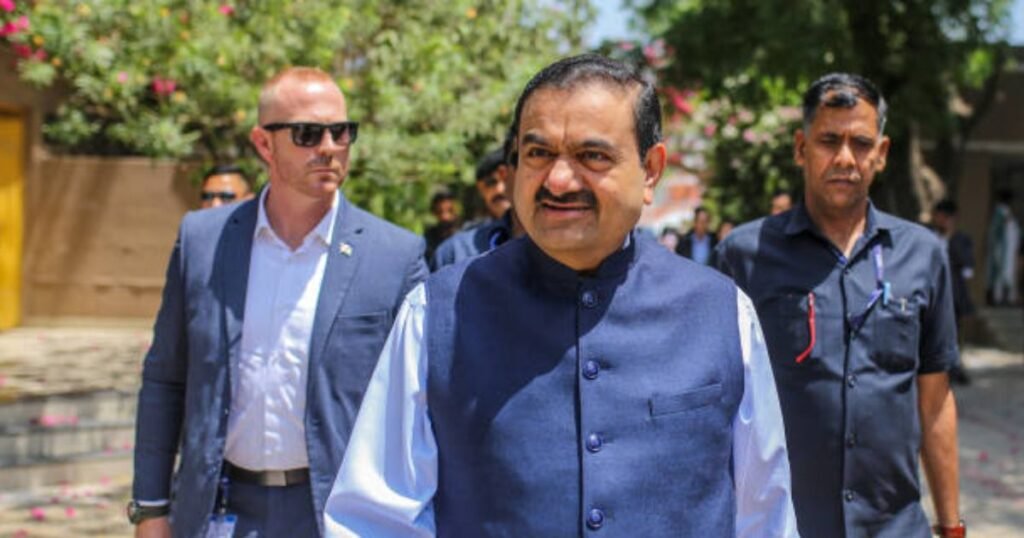
Gautam Adani’s business trajectory began with trading commodities in Mumbai before establishing his operations in 1988. His first major venture focused on port development, which would become the central pillar of his expanding empire. The founder strategically targeted infrastructure gaps, recognizing that power and logistics would drive India’s economic growth. His company secured critical contracts through aggressive bidding, transforming from a regional player into a global conglomerate. Originally, the Adani Group concentrated on Mundra Port, but soon diversified into thermal power plants and renewable energy.
Gautam Adani: Key Business Milestones
- Adani Exports (now Adani Enterprises) – founded in 1988
- Largest private port in India, Mundra Port – developed in 1995
- 1996–2006 – started working for Adani Power in the power industry
- 2009–2012 – purchased Australia’s Abbot Point Port and Carmichael Coal Mine
- Adani Transmission – introduced for power distribution in 2015
- 2020 – acquired the largest solar bid in the world (~$6 billion) for renewable energy
- 2022 – purchased a 74% interest in Mumbai International Airport
- 2022 – acquired Ambuja Cements & ACC ($10.5 billion), joining the cement sector
- 2022 – Third richest person in the world
- 2025 – preparing Navi Mumbai International Airport for opening
By 2022, he had attained recognition as one of the world’s richest individuals, appearing on Time magazine’s list of 100 most influential people. His business empire expanded through strategic acquisitions, including a 74% stake in Mumbai International Airport and the $10.5 billion purchase of Ambuja Cements. The chairman also entered media, acquiring NDTV through an overseas special-purpose entity called AMG Media Networks Limited. His companies now operate across cement, agribusiness, data tech, and ports, making him India’s most prominent industrialist. The group’s rapid expansion, particularly during the early 2020s, saw his wealth surge by approximately $10 billion, though controversies regarding his association with the ruling Bharatiya Janata Party and Prime Minister Narendra Modi have persisted throughout his career.
Adani Group
- Founded by Gautam Adani in 1988
- Headquartered in Ahmedabad.
- Close association with the Bharatiya Janata Party
- Developed its own port in Mundra (1990)
- Signed a pact with the Rajasthan Government for a 50:50 joint venture
- Began construction at the port in Vizhinjam, Kerala.(November 2015)
The Adani conglomerate’s evolution from a diamond trading venture in 1979 to a diversified empire reflects strategic positioning during India’s liberalization. Gautam Adani capitalized on relaxation of import licenses in 1983, while his brother Mansukhlal managed the family’s plastics factory. The partnership firms established during this period laid groundwork for subsequent expansion into infrastructure sectors. Gujarat State Export Corporation facilitated the flow of resources that enabled Adanis to dominate port development through joint ventures with private companies. The Mundra port, operational by 1998, became central to operations despite terms that removed environmental and socioeconomic protections for rapid industrial development.
Power generation business entry in 2006 marked diversification beyond logistics, followed by acquisition of Abbot Point Port in Australia and the Carmichael coal mine in Queensland between 2009 and 2012. The conglomerate benefited substantially from Prime Minister P.V. Narasimha Rao’s program of foreign investment liberalization during the 1990s, which allowed Gujarat state to leverage its geographic advantages. However, this growth trajectory has been punctuated by multiple controversies, including a 2002 arrest by Delhi Police following a cheating complaint from M S Shoes officials. The business associate kidnapping incident, which saw eight suspects tried with six acquitted by 2005 and two more in 2018 due to lack of evidence, highlighted operational risks during expansion phases.
Controversies / Hindenburg’s Report / Hindenburg Controversy
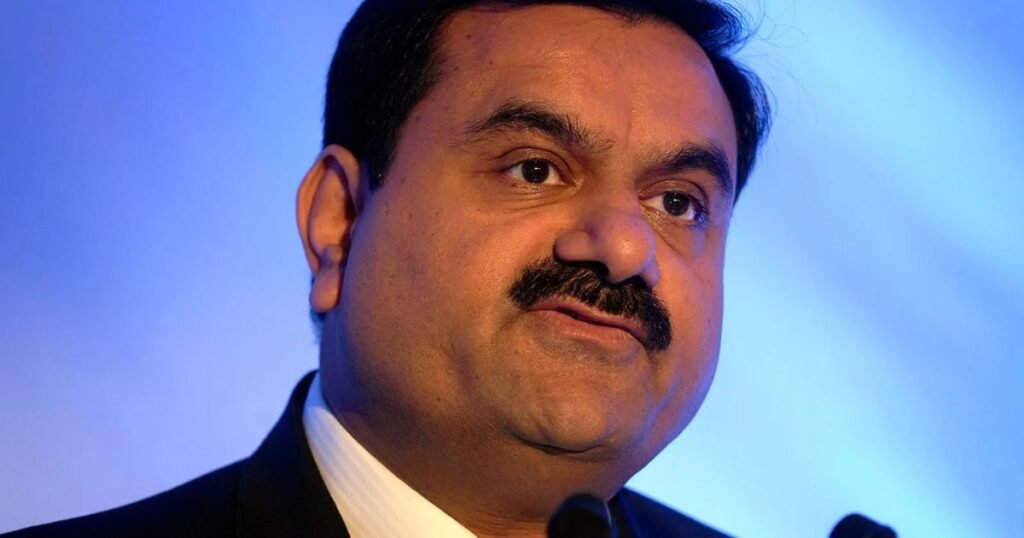
The January 2023 disclosure sent stocks tumbling as Hindenburg Research released a detailed report alleging widespread stock manipulation and accounting fraud across the Adani Group’s portfolio. This short-seller’s report claimed the conglomerate used offshore shell companies in tax havens to artificially inflate valuations and obscure debt levels. Market capitalization eroded by over $100 billion within weeks, triggering global concerns about corporate governance standards.
Controversies keypoints
- Hindenburg accused the Adani Group of stock manipulation and fraud.(January 2023)
- $100 billion in market loss in Adnai Stocks.
- SEBI investigation found no market manipulation(Sep 2025).
The fallout extended beyond immediate financial losses, as international lenders and investors scrutinized the group’s financial statements more closely. Hindenburg’s allegations questioned the legitimacy of related-party transactions and highlighted potential regulatory violations. Despite strong denials from the company calling the report malicious and baseless, the controversy reignited debates about transparency in Indian conglomerates and sparked calls for deeper investigations into corporate practices.
OCCRP Report
Report emerged from OCCRP, titled “The Pandora Papers,” and detailed offshore structures. Vinod Adani, Gautam Adani’s brother, allegedly controlled funds through complex arrangements. Investigated entities showed links to shell companies registered across multiple jurisdictions. Authorities noted these structures obscured beneficial ownership patterns. Allegations suggested money laundering schemes involving tax havens and undisclosed assets. Documents revealed transactions routing through Mauritius and Caribbean islands systematically. Compliance questions arose regarding disclosure norms under Indian regulatory frameworks consistently.
Investigations by OCCRP also highlighted investments made through intermediaries masking true controllers. Foreign portfolio routes appeared designed to circumvent transparency requirements deliberately. Regulatory bodies including SEBI began examining these offshore holdings for violations. Claims emerged about undisclosed beneficial interests in publicly traded companies. Financial analysts questioned how such structures remained undetected during previous audits. Scrutiny intensified after journalists published detailed evidence from leaked banking records. Records showed systematic patterns suggesting deliberate concealment of wealth across borders.
Bribery Charges / Fraud Charges
Criminal counts emerged in November 2024 when a five-count criminal indictment charged the billionaire and other executives. Prosecutors alleged that over $250 million in bribes were paid to secure contracts across Andhra Pradesh, Chhattisgarh, Odisha, Jammu and Kashmir, and Tamil Nadu. The Indian business relationship with state officials drew attention from both American courts and local authorities. This controversial case marked a significant moment as investors watched the firm’s response unfold.
Fraud Charges Keypoints
- Alleged in $265 million bribery scheme in India
- Gautam, his nephew Sagar Adani, Adani Green Energy Ltd former CEO Vneet Jaain were charged
- Charged by the U.S. Securities and Exchange Commission
The charges triggered immediate concern among stakeholders while the company’s founders maintained their position. Prosecutors presented documents to prove systematic violations spanning multiple years. The indictment specifically named senior leadership for their criminal roles in the scheme. American legal frameworks now intersect with Indian laws as authorities coordinate the investigation. The dispute continues to attract international scrutiny despite the business empire’s denial of wrongdoing.
Political Views / Start of Political Association / Relations with BJP-led Union Government
Gautam Adani’s close ties with the BJP-led Union Government have sparked considerable debate regarding cronyism and favor. Critics allege that key moments in his business career coincided with policy shifts under Modi’s government, which reportedly helped accelerate his rise. The symbiotic relationship between political power and corporate expansion has been described as nation building by supporters, yet opposition parties claim it represents systematic favoritism.
Adani’s growth trajectory received significant momentum during the Gujarat government era, where infrastructure projects and Special Economic Zone developments were facilitated through government cooperation. His Group’s website emphasizes helping build world-class infrastructure capabilities for India’s development. However, the Supreme Court has dismissed requests for SIT and CBI investigations into alleged irregularities, resolving controversies that opposition leaders have called motivated attacks on transparency.
Adani vs Ambani: Relationship & Wealth Growth Overview
| Category | Gautam Adani (Adani Group) | Mukesh Ambani (Reliance Industries) | Relationship Summary |
|---|---|---|---|
| Core Focus | Infrastructure, energy, logistics, ports, airports | Telecom, digital services, retail, petrochemicals | Operate in distinct sectors |
| Govt. Alignment (Post-2014) | Strong ties via national infrastructure & renewable projects | Key partner in Digital India and 5G rollout | Both closely aligned with Modi-era policies |
| Wealth Growth (2014–2024) | ~$5 B → ~$85 B+ | ~$23 B → ~$115 B+ | Major rise during Modi government |
| Market Image | Infrastructure builder, sometimes linked to political proximity | Consumer tech & retail innovator with broad appeal | Coexistence with limited overlap |
| Competition Level | Low — focus on public utilities | Low — focus on consumer economy | Competitive-coexistence, not rivalry |
| Shared Themes | Expansion, policy support, renewable energy push | Innovation, digital transformation | Both benefited from pro-business governance |
Read More
- Explore John Miller’s career and net worth on Pakistan Coverage
- Learn more about Handyman Hal’s net worth on Pakistan Coverage
- Further details on John Miller on Pakistan Coverage
FAQ
Who is richest, Ambani or Adani?
Adani has recently surpassed Ambani to become the richest in India.
Who is the no. 1 richest person in the world?
Elon Musk currently holds the top spot globally.
How much is Adani in debt?
Adani Group’s total debt is estimated at around $120 billion.
Which banks have exposure to ADANI?
Several Indian and international banks are lenders to Adani Group companies.
How does Adani make money?
Through diversified businesses including ports, energy, infrastructure, and commodities.

Khansa Farooq is a celebrity wealth analyst and entertainment finance journalist specializing in comprehensive net worth investigations for Pakistan Coverage. With expertise in financial research, asset evaluation, and entertainment industry economics, she delivers accurate and detailed celebrity wealth profiles. Her meticulous research approach and commitment to verified financial data ensures readers receive reliable insights into the fortunes of Pakistan’s biggest stars and international celebrities.